Essential Drone Safety and Regulation Resources & Services for Australia
Our mission is to provide Information, Knowledge, Advice and Tools to support commercial drone operators in achieving the highest possible levels of safety for their business. We aim to contribute to the Australian drone industry having a world leading safety performance.
The Australian drone industry is growing rapidly — but growth without safety is fragile. Australian Drone Safety exists to help commercial operators build the safety foundations their businesses need: expert analysis of CASA regulation, safety management frameworks, and practical tools for the field. This is not a restatement of what CASA publishes. It is independent expert interpretation of what regulatory change means for your operations and how people & systems can together deliver safe outcomes.
Our resources and services will grow over time and are designed to help you navigate complex regulations and develop a strong operating safety culture. Whether you are a new commercial operator or an experienced professional, our aim is to provide insights that assist you in ensuring your operations remain compliant and safe.
Subscribe to our newsletter for the latest drone safety news and regulatory updates in Australia. The Australian Drone Safety Brief is a fortnightly newsletter providing expert analysis and plain-language explanation of the safety and regulatory developments that matter most to Australian commercial operators — including CASA regulatory changes, SMS frameworks, and lessons from incidents and near-misses. Join a community of informed operators who prioritize safety and compliance.
Our Team

Dr Rob Weaver
Founder
Rob has worked in aviation safety for over 25 years and holds a PhD in safety critical systems. Through his career he has managed aviation safety management systems and safety change processes for national aviation organisations. He served as an Air Navigation Service Provider Safety Executive with accountability for safety policy, regulatory compliance, safety performance monitoring, assurance and investigations. He has worked on new and emerging aviation technology — including drones and advanced air mobility — since 2018. Rob has extensive safety training experience and has provided consulting advice to organisations in Australia, New Zealand, the UK, the US and Brazil. He is a Board Director of the Australian Association for Uncrewed Systems.
Is this you?
Contributor
Do you want to join Australian Drone Safety and contribute to delivering a world class Australian done industry safety performance? Reach out to discuss more.
By the numbers
Supporting your operations
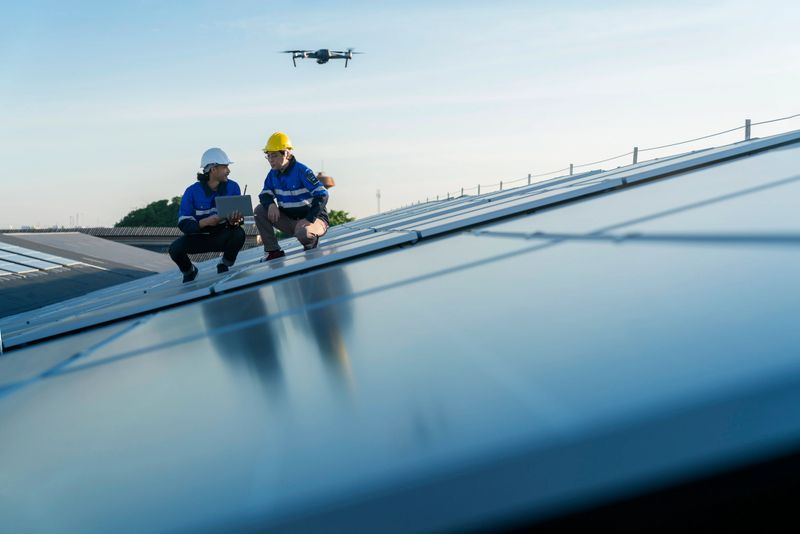
Australian Drone Safety has an extensive network of partner organisations and individuals who can support commercial drone operators in achieving safe outcomes and regulatory compliance.
Reach out to have an informal discussion about your operations and challenges to see if we can help.
FAQs
What is AusSORA and why does it matter for my operations?
AusSORA — the Australian Specific Operations Risk Assessment — is CASA's nationally adapted version of the internationally recognised JARUS SORA 2.5 methodology. It is the framework CASA uses to assess the risk of drone operations and determine the safety mitigations required to operate safely in complex environments. AusSORA was formally adopted by CASA in May 2026 through Advisory Circular AC 101-06, replacing earlier interim arrangements, and includes Australian-specific modifications — including a ground risk table that accounts for Australia's dispersed population densities, which the European-derived original did not adequately reflect.
AusSORA assesses two primary risk categories: ground risk (the likelihood and consequence of harm to people on the ground) and air risk (the likelihood of a collision with a crewed aircraft). The outcome of an AusSORA assessment is a Specific Assurance and Integrity Level (SAIL), which determines the operational safety objectives your operation must meet. For any commercial operator seeking BVLOS approval or operating in complex environments that fall outside the standard rules, understanding and correctly applying AusSORA is not optional — it is the foundation of your safety case and your pathway to regulatory approval.
What does my ReOC require in terms of a Safety Management System?
CASR Part 101 requires ReOC holders to have an Operations Manual that incorporates safety management elements, and CASA audits operators against a Management System Model covering six systems and 17 elements — which effectively functions as an SMS assessment framework. While a standalone SMS is not explicitly mandated by Part 101 in the same way it is for air transport operators, CASA strongly encourages all ReOC holders to implement a formal SMS and provides dedicated guidance for doing so (CASA SMS Book 9, Safety Management Systems for RPAS).
At its core, an SMS is a systematic approach to managing safety risk. The same four-pillar framework applies to all ReOC holders regardless of size — though the depth and complexity of each element should reflect your operations:
- Safety policy and objectives — a documented safety policy signed by your CEO or Accountable Manager, demonstrating genuine management commitment
- Safety risk management — a hazard register with associated risk assessments and mitigations
- Safety assurance — processes for reporting and investigating safety occurrences, monitoring safety performance, and driving continuous improvement
- Safety promotion — training, communication, and a just safety culture
For most commercial drone operators, having these elements formalised and documented — even in a proportionate, right-sized way — is both a mark of a mature operation and an increasingly practical commercial necessity. As enterprise clients and government contracts more frequently require demonstrated safety management capability, a well-implemented SMS delivers real competitive advantage, not just regulatory comfort.
How do I approach a BVLOS approval application?
A BVLOS approval application to CASA requires a structured safety case demonstrating that your operation can be conducted safely beyond visual line of sight. The right starting point depends on whether your operation qualifies for the Broad Area BVLOS trial pathways introduced by CASA in October 2025.
Under TMI 2025-03, four streamlined approval pathways are available for ReOC holders operating small drones of 25kg or under. Each pathway sets specific conditions based on drone size, speed, and the population density of the operating area. If your operation meets the criteria for one of these pathways, the process is significantly more streamlined than a standard BVLOS application — you confirm pathway eligibility, update your documented procedures to include the BVLOS area feasibility assessment process, and nominate a suitably qualified person to conduct those assessments. If it is your first BVLOS application, you will also be required to complete an AusSORA BVLOS approval form and CASA will assess your operational competency through an onsite check before finalising your authorisation.
If your operation does not fit within one of the trial pathways — including all operations involving medium or large RPAs above 25kg — you must apply through the standard BVLOS process. This begins with an AusSORA assessment to determine your ground and air risk levels and the operational safety objectives your operation must meet. You will need to document your operational concept in detail — including contingency volumes, ground risk buffers, airspace assessment, and stakeholder engagement — and demonstrate that your aircraft, crew, and procedures meet the requirements for your SAIL level.
In either case, incomplete or poorly structured applications are the most common cause of delays. Allow significant lead time and ensure your supporting documentation, including SOPs and emergency response plans, is complete before lodging.
What are the most common safety case mistakes?
Based on experience reviewing safety cases, the most frequent issues include insufficient evidence supporting claimed risk mitigations, operational concepts that are too vague to demonstrate genuine safety assurance, inadequate risk assessments that fail to account for the full range of operational scenarios, and contingency procedures that are documented but not operationally credible.
A common structural mistake is treating the safety case as a compliance checklist rather than a genuine argument that the operation is safe — CASA is looking for a coherent, evidence-based case, not just completed forms. It is important not to underestimate the importance of demonstrating crew competency and the airworthiness of systems as part of the overall safety argument. For drone operations, the strongest applications are those where the operator clearly understands their risks, has selected appropriate and proportionate mitigations, and can demonstrate through evidence that those mitigations are effective in practice.
How do I report a drone safety occurrence to the ATSB?
Under the Transport Safety Investigation Regulations 2021, operators of certain remotely piloted aircraft are required to report defined safety occurrences to the Australian Transport Safety Bureau (ATSB). Your reporting obligations depend on which category your aircraft falls into.
Type 1 RPAs — type-certified aircraft, large RPAs over 150kg, and medium RPAs between 25kg and 150kg — carry the broadest reporting obligations. Immediately reportable occurrences, which must be notified by telephone as soon as reasonably practicable, include death or serious injury, accidents, loss of a separation standard with another aircraft, and serious damage to third-party property. Less serious occurrences must be reported within 72 hours via the ATSB's online portal.
Type 2 RPAs — those that are not Type 1, and not excluded or micro aircraft — cover most commercial drones under 25kg. For Type 2 operators, the only immediately reportable trigger is death or serious injury, which must again be reported by telephone as soon as reasonably practicable. Less serious incidents and damage to the aircraft itself are routine reportable matters, required within 72 hours via the online portal.
Micro RPAs (250g or under) and excluded category aircraft have no mandatory reporting requirements under these regulations.
Online reports for both Type 1 and Type 2 operators are made through the ATSB's reporting portal at www.atsb.gov.au. Unsafe drone operations by others can be reported separately to CASA at www.casa.gov.au/about-us/contact-us/report-unsafe-drone-use. It is important to understand that ATSB investigations are conducted for safety improvement purposes, not to apportion blame or liability — early and accurate reporting supports the broader goal of improving safety outcomes across the industry.
Disclaimer
The information published on this website is provided for general educational and informational purposes only. It is intended to support commercial drone operators in understanding Australian aviation safety and regulatory matters, but it does not constitute legal, regulatory, or professional advice and should not be relied upon as such.
While we take care to ensure the accuracy and currency of the information provided, aviation regulation is subject to frequent change. CASA advisory circulars, the Part 101 Manual of Standards, ATSB reporting requirements, and associated instruments are updated regularly and without notice. We cannot guarantee that all content on this site reflects the most current regulatory position at the time you read it.
Operators are responsible for verifying all regulatory requirements directly with CASA and the ATSB before making operational or compliance decisions. Nothing on this site replaces your obligation to consult primary sources, including the Civil Aviation Safety Regulations 1998, relevant Manuals of Standards, and current CASA advisory circulars.
To the extent permitted by law, Australian Drone Safety accepts no liability for any loss, damage, or regulatory consequence arising from reliance on information published on this website.
If you identify an error or believe any content is out of date, please contact us at rob@australiandronesafety.com.au. We are committed to correcting inaccuracies promptly.